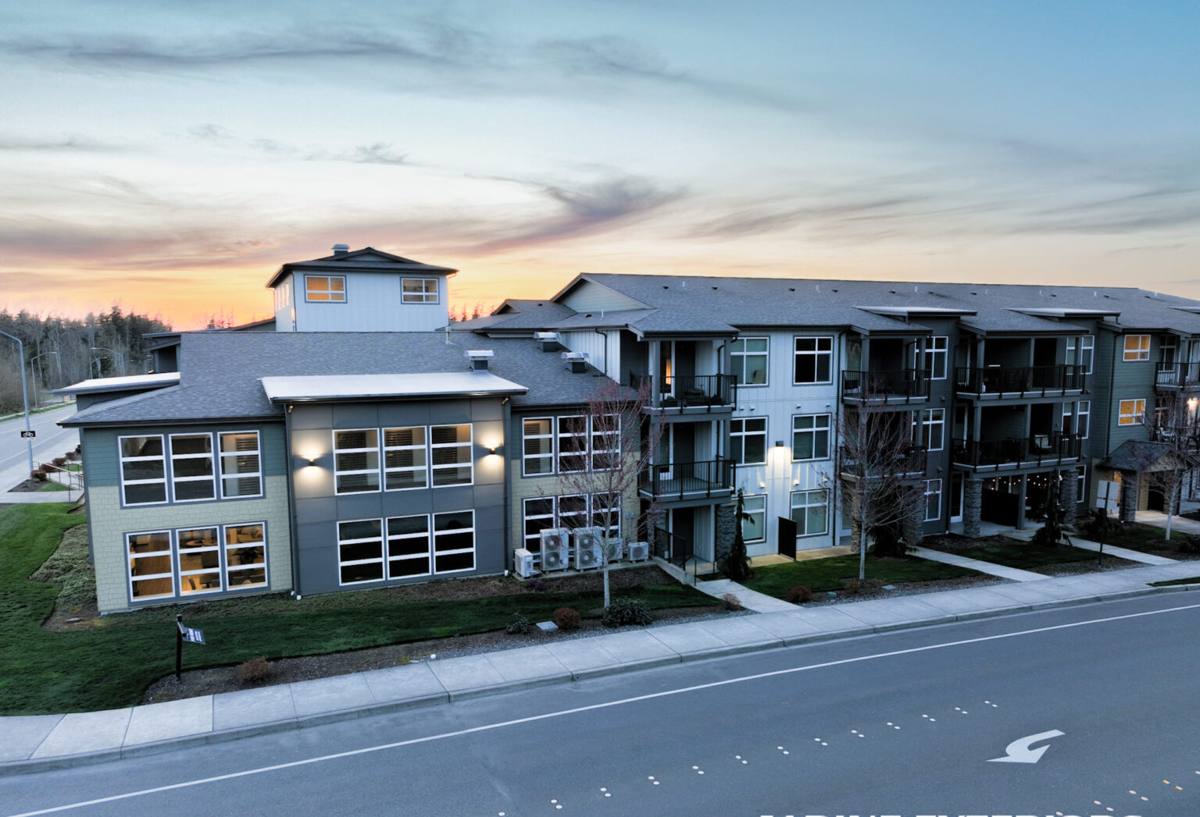
 Bellingham Exterior
 Why Sunnyland Roofs Wear Out Differently Than Roofs Inland
Sunnyland sits close enough to Bellingham Bay that homes here take on a mix of weather most inland Whatcom County neighborhoods don't deal with in the same combination. There's salt-tinged marine air moving in off the water, long stretches of driving rain that comes in sideways during winter storms, and shade from mature trees that keeps roof surfaces damp far longer than a roof in a more open, sun-exposed part of Bellingham. Put those three together and you get a roof that ages on its own schedule — not the schedule printed on the shingle wrapper.
Salt air accelerates corrosion on exposed metal fasteners, flashing, and vent components. Driving rain finds its way into laps, seams, and nail penetrations that would stay dry in a calmer climate. And shade plus moisture equals moss — not a cosmetic nuisance, but an organism that holds water against the roofing material and works its way under shingle edges over years. A roof installed without accounting for all three of these factors may look fine for a while, then fail years ahead of its expected lifespan.
Signs a Sunnyland Home Needs Full Replacement, Not Another Repair
Homeowners often ask us to patch a leak, and sometimes a patch is genuinely the right call. But there's a point where repeated repairs stop making financial sense and a full replacement becomes the honest recommendation. Some signals we look for:
- Granule loss heavy enough that you're finding sand-like grit in gutters every season, not just after a storm
- Moss established in more than one section of the roof, especially on north-facing slopes that stay shaded most of the day
- Soft spots or sagging in the decking when walked, which usually means moisture has already reached the sheathing
- Multiple past repairs in different areas of the same roof, rather than one isolated problem spot
- Shingles curling, cracking, or lifting at the edges — a sign the material has reached the end of its flexibility
- Visible daylight through the attic decking, or damp insulation after rain events
If a roof is showing one or two of these, repair may still make sense. If it's showing several at once, replacement is usually the more cost-effective path — because the labor to keep chasing individual leak points on a failing roof adds up faster than most homeowners expect.
What a Correctly Installed Roof System Actually Includes
A roof isn't one product — it's a system of layered components, and each layer has a job. Skipping or downgrading any one of them is usually where premature failures start, especially in a climate like Bellingham's.
| Layer | Purpose | Why it matters here |
|---|---|---|
| Decking inspection/repair | Structural base for everything above it | Years of moisture intrusion can rot sheathing before it's visible from the surface |
| Ice-and-water membrane | Self-sealing barrier at vulnerable points | Protects eaves, valleys, and penetrations from wind-driven rain, not just ice |
| Synthetic underlayment | Secondary water barrier under the shingles | Holds up to prolonged damp conditions far better than old felt paper |
| Flashing (step, valley, chimney) | Directs water away from joints and transitions | Marine air corrodes cheap or bare-metal flashing faster than inland installs |
| Roofing material | Primary weather surface | Needs to handle both UV exposure and constant moisture cycling |
| Ventilation (intake + exhaust) | Moves air through the attic space | Reduces the trapped moisture that feeds moss and rot from underneath |
When we quote a job, we walk through each of these layers specifically rather than just naming a shingle brand. A roof is only as good as its weakest layer, and in a wet climate that's rarely the shingle itself — it's usually the underlayment, flashing, or ventilation that was cut corners on.
Material Options for Sunnyland Conditions
| Material | Typical lifespan | Moss/moisture behavior | Cost position |
|---|---|---|---|
| Architectural asphalt shingle | 25–30 years | Good with proper ventilation; benefits from algae-resistant granules in shaded areas | Moderate |
| Standing seam metal | 40–50+ years | Sheds moss and moisture very well due to smooth, non-porous surface | Higher upfront |
| Synthetic composite (slate/shake look) | 30–50 years | Resists moisture absorption better than natural wood shake | Higher |
| Cedar shake | 20–30 years with upkeep | Requires regular treatment and cleaning to resist moss and rot in this climate | Moderate to higher |
We don't push one material on every home. A shaded Sunnyland lot under fir and cedar trees is a different situation than an open, sun-exposed roofline a few blocks away, and the right material choice should reflect that.
How Our Installation Process Works
- On-site inspection and estimate. We walk the roof, check the attic from inside when accessible, and identify decking condition, ventilation setup, and problem areas before quoting anything.
- Tear-off and decking evaluation. Old material comes off down to the deck so we can actually see what we're working with, rather than layering over existing problems.
- Decking repair or replacement. Any soft, rotted, or delaminated sheathing gets replaced before a single new layer goes down.
- Underlayment and ice-and-water barrier installation. Applied at eaves, valleys, and penetrations first, then across the full deck.
- Flashing installation. New flashing at chimneys, walls, valleys, and vents — this is one of the most common places we find corrosion on older Bellingham roofs.
- Roofing material installation. Installed to manufacturer spec and local code, with attention to nailing pattern and exposure — details that matter more in high-wind, high-rain conditions.
- Ventilation check and correction. We verify intake and exhaust balance and add or correct venting where the attic isn't moving air properly.
- Cleanup and final walkthrough. Magnetic sweep for stray nails, gutter check, and a walkthrough so you understand what was done and why.
Ventilation and Moisture Control: The Part Most Homeowners Don't See
Attic ventilation gets overlooked because it isn't visible from the curb, but it's one of the biggest factors in how long a roof actually lasts in a place like Bellingham. Without balanced intake and exhaust airflow, moisture from daily living — cooking, showers, laundry — rises into the attic and has nowhere to go. That trapped moisture condenses on the underside of the decking, feeds rot from below, and creates the same damp conditions that let moss take hold from above. A new roof installed over a poorly ventilated attic can develop problems years before it should, no matter how good the shingles are.
Part of our process is checking whether existing vents are correctly sized and positioned, not just present. On older Sunnyland homes we sometimes find vents that were installed decades ago and never resized as the home was remodeled or insulated further — leaving the attic under-ventilated for its current setup.
Permits, Code, and Working in Whatcom County
Full roof replacements typically require a permit through the City of Bellingham or Whatcom County, depending on the property's location, and inspections are tied to that permit process. Local code also dictates things like minimum underlayment requirements and ventilation ratios for the region's climate zone. A crew that pulls the correct permit and builds to code isn't just following a formality — it means the work has been checked against standards that exist specifically because of the weather conditions homes here deal with.
Why Local Experience in Sunnyland Specifically Matters
Roofing crews that regularly work in and around Sunnyland get to know the patterns particular to this part of Bellingham — which streets sit in heavier tree shade, where moss tends to establish fastest, and which older homes were built with ventilation setups that need updating during a replacement. That local pattern recognition speeds up the estimate process and reduces surprises once tear-off starts, because we've already seen similar decking, flashing, and framing conditions on nearby homes.
It also matters for response time. A crew based in the area can get back out to check on a completed job, address a warranty question, or fit in a smaller follow-up repair without the delay of a company driving in from well outside the county.
A Homeowner's Post-Installation Checklist
- Walk the attic (if accessible) once or twice a year to check for damp insulation or daylight gaps
- Clear moss or debris from gutters before the fall rains start
- Trim back overhanging branches that keep sections of the roof shaded and damp
- Watch for granules building up in gutters, which can signal early wear
- Keep a copy of your warranty and permit paperwork somewhere accessible for future reference
- Schedule a quick visual check after any major windstorm to catch lifted shingles or flashing early
If your Sunnyland roof is showing its age, or you just want an honest read on whether repair or replacement makes more sense, we're glad to take a look. There's no pressure and no obligation — just a straightforward estimate based on what your roof actually needs. The form below will get you started.