 Bellingham Exterior
 Why Window Replacement Looks Different in Sunnyland
Sunnyland is one of Bellingham's established residential neighborhoods, with a mix of mid-century homes and newer infill construction sitting on tree-lined lots. That combination matters when it comes to windows. Older sashes in this neighborhood were often built for a different era of glass and weatherproofing standards, and mature landscaping means many homes get less direct sun and more shade than a newer subdivision on open ground. Shade keeps a house cool in summer, but it also keeps wood and trim damp longer after every rain event, which is a big deal in a place that sees as much rain as Bellingham does.
We're not talking about a generic "replace your old windows" pitch here. Window replacement in Sunnyland has to account for the specific way this neighborhood's homes were built, how they're oriented on their lots, and what Whatcom County's marine climate does to a window assembly year after year. That's the difference between a job that looks fine at handoff and one that still performs correctly in ten years.
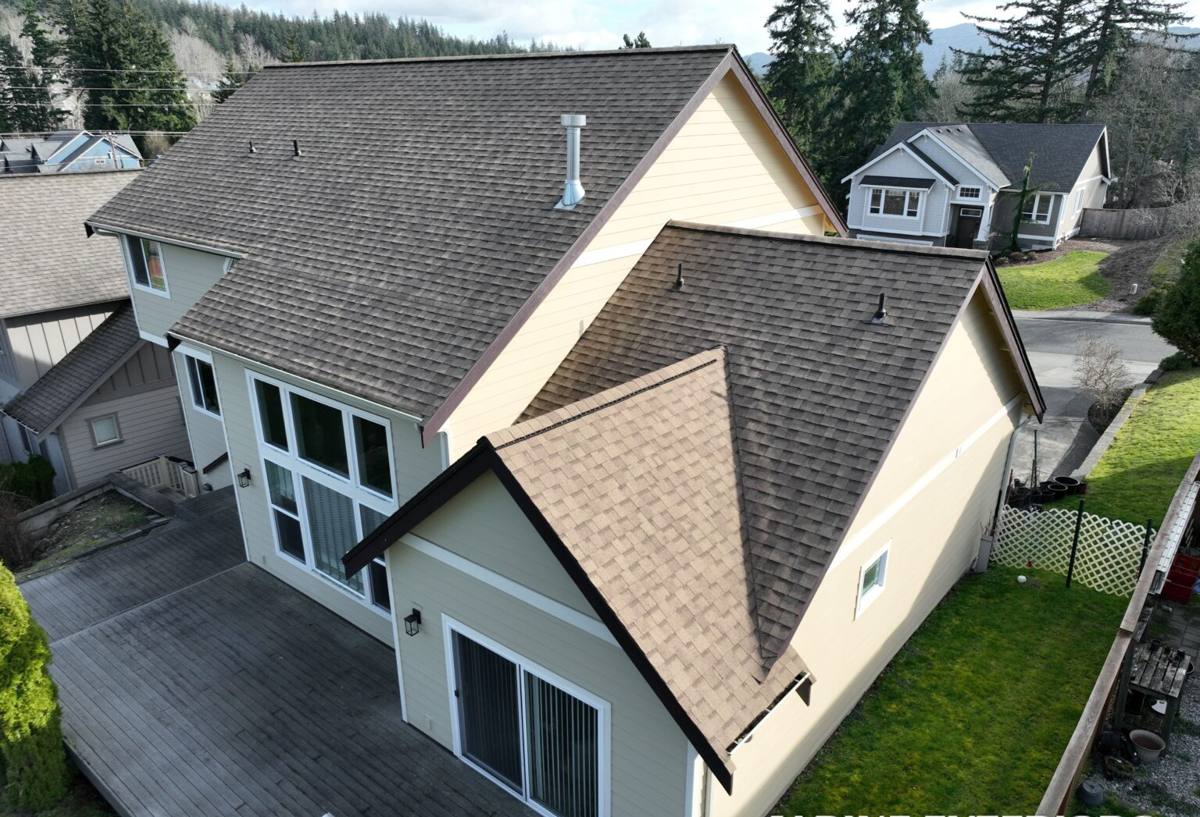
What Bellingham's Climate Does to Windows Over Time
Salt Air and Slow Corrosion
Bellingham sits right on the water, and even a few miles inland, salt-laden air finds its way into window hardware, aluminum cladding, and fasteners. It's a slow process — you won't see damage in year one — but over a couple of decades it pits metal, corrodes weep holes and hinges, and can cause aluminum-frame windows in particular to bind, stick, or stop sealing tightly. Homes in Sunnyland aren't waterfront, but the marine air still reaches them, and it's one more reason "it still opens and closes" isn't the same as "it still performs."
Driving Rain and Water Intrusion
Whatcom County doesn't just get rain — it gets wind-driven rain that hits windows sideways, not straight down. A window that was installed without proper flashing or a sloped sill can look completely fine from inside for years while water is quietly working its way into the framing behind it. By the time you see a stain on the drywall or soft trim, the damage has usually been building for a while. This is the single most common water-related problem we run into on older Bellingham homes, and it's rarely the glass itself — it's the installation detailing around it.
Moss, Shade, and Slow-Drying Wood
Bellingham's moss season runs long, and shaded, tree-covered lots — common throughout Sunnyland — make it worse. Wood sills, trim, and cladding near windows that don't get much sun can stay damp for days after a storm, which is exactly the environment moss, algae, and eventually rot need to take hold. It's a slower failure mode than a leak, but it's just as real, and it's specific to neighborhoods with this much tree cover.
Signs a Sunnyland Home Is Ready for Window Replacement
Not every window problem means full replacement — sometimes a window just needs new weatherstripping or a re-glaze. But certain signs point to the window assembly itself failing, not just wearing out cosmetically:
- Visible fogging or a permanent haze between panes (a sign the seal has failed and the insulating gas has escaped)
- Soft, spongy, or discolored wood at the sill or lower corners of the frame
- Windows that are hard to open, won't stay open, or don't latch flush anymore
- Noticeable drafts near the frame even when the window is fully closed and locked
- Condensation forming on the inside of the glass regularly, especially in cooler months
- Visible moss, algae, or dark streaking on the exterior trim around the window
- A cold spot you can feel from several feet away when standing near the window
- Paint that keeps bubbling or peeling on interior trim no matter how often it's redone
If you're seeing more than one or two of these, especially the moisture-related ones, it's worth having someone look at the whole window — not just the symptom — before deciding on a repair versus a replacement.
Choosing a Window Built for This Climate
Frame material matters more here than it does in a drier climate, because it determines how the window handles years of rain, humidity, and salt air. There's no single "best" material for every home — it depends on your budget, your home's style, and how much upkeep you actually want to do.
| Frame Material | How It Handles This Climate | Maintenance |
|---|---|---|
| Vinyl | Won't rot or corrode; performs well against moisture and salt air | Low — occasional cleaning |
| Fiberglass | Very stable in temperature swings and moisture; strong long-term option | Low |
| Aluminum | Durable but conducts cold and is more prone to condensation and corrosion near salt air over time | Moderate |
| Wood / Wood-Clad | Attractive, especially on older or character homes, but needs consistent upkeep in a wet climate | Higher — regular sealing and paint maintenance |
We're upfront with homeowners about this: wood windows can look great, but in a neighborhood with as much shade and moisture as Sunnyland, they demand more maintenance discipline than vinyl or fiberglass. That's not a knock on wood — it's a real trade-off, and we'd rather you know it going in than find out the hard way five years later.
Glass Package Matters Too
Beyond the frame, the glass package affects both comfort and condensation resistance. Double-pane with a low-E coating is the standard baseline for this region; triple-pane adds further insulation and can help reduce interior condensation on the coldest, dampest days, though it comes at a higher cost and added weight. We'll walk through what makes sense for your specific home rather than defaulting to the most expensive option.
What a Correct Installation Actually Involves
The window product is only part of the equation — installation detailing is what determines whether that product actually keeps water out for the next twenty-plus years. A correct replacement in this climate includes:
- Removing the old window and inspecting the rough opening for hidden rot or moisture damage before anything new goes in
- Installing or correcting a sloped sill pan so any water that gets past the exterior seal drains back out, not into the wall
- Proper flashing integration with the home's existing weather-resistive barrier, lapped correctly so water sheds outward and downward
- Continuous, correctly sized backer rod and sealant at the exterior perimeter — not just a bead of caulk over gaps
- Insulating the gap between the window frame and rough opening without overpacking it, which can bow the frame
- Interior and exterior trim work that's sealed and finished, not just reinstalled as-is
Skipping any one of these steps is how a brand-new, expensive window ends up with the same water problems as the old one within a few years. It's also the part of the job that's hardest for a homeowner to verify just by looking at the finished window — which is why the crew doing the work matters as much as the product they're installing.
Our Process for Sunnyland Homeowners
- On-site assessment. We look at each window individually — not every window on a house is failing the same way or for the same reason.
- Honest scope and options. We'll tell you which windows genuinely need replacement, which could be repaired, and what materials make sense for your home and budget.
- Accurate measurement and ordering. Older Bellingham homes are rarely perfectly square, so we measure each opening individually rather than assuming uniformity.
- Careful removal and opening inspection. We check for hidden moisture or rot damage before the new window ever goes in.
- Proper flashing, sealing, and insulation. This is where long-term performance is won or lost, and we don't shortcut it.
- Interior and exterior finish work. Trim, caulking, and paint-ready surfaces so the job looks as good as it performs.
- Walkthrough and cleanup. You see the finished work before we consider the job done, and we clean up fully — no debris, no old windows left behind.
What Affects the Cost of a Window Replacement Project
Costs vary based on several factors, and we'll always give you a real number for your specific home rather than a generic quote. In general, the biggest cost drivers are:
| Factor | Why It Affects Cost |
|---|---|
| Number of windows | Per-window cost typically drops slightly as project scope increases |
| Frame material | Vinyl and fiberglass generally cost less upfront than wood or wood-clad options |
| Window size and type | Larger units, bay windows, or custom shapes cost more than standard double-hung sizes |
| Condition of the opening | Hidden rot or framing damage found during removal adds repair time and materials |
| Access and site conditions | Second-story windows or tight access points take longer to complete safely |
| Trim and finish work | Matching existing interior trim or historic profiles adds labor |
Broad ranges exist for this kind of work, but they're only useful once we've actually seen your windows — a firm number always beats a rough guess, especially when hidden moisture damage is a real possibility on older homes.
Why Hiring a Crew That Already Works in Sunnyland Matters
Window replacement done right depends on understanding the conditions a house actually sits in, not just the window itself. A crew that regularly works this neighborhood already understands how much shade and moisture a given block tends to hold onto, what kind of framing and siding details are common on Sunnyland's older housing stock, and how to schedule installation around Bellingham's weather rather than fighting it. We also know that in a climate this wet, there's no room to be casual about flashing and sealing — because the next atmospheric river isn't far off, and a poorly sealed window will show it fast.
Beyond the technical side, local experience means fewer surprises: knowing what permitting applies to exterior work in the City of Bellingham, understanding realistic install windows between weather systems, and having a track record in the immediate area rather than showing up cold. That familiarity translates directly into fewer callbacks and a job that holds up through its first few Bellingham winters, not just its first inspection.
Get a Free, No-Pressure Estimate
If your Sunnyland home has windows that are drafty, foggy, sticking, or showing moss and moisture damage around the trim, it's worth having a straightforward, no-obligation look before problems get more expensive to fix. Fill out the form below and we'll set up a time to assess your windows and give you honest options — no pressure, no upsell, just a clear picture of what your home actually needs.