 Bellingham Exterior
 Window Installation Built for South Hill's Climate
South Hill sits up on the slope above downtown Bellingham, which means homes here catch weather a little differently than houses down closer to the water or tucked into the flats. Elevation brings more direct exposure to wind-driven rain, and the mix of older character homes with newer infill means we see a wide range of window conditions on any given block — original wood sash from decades past sitting a few doors down from vinyl replacements installed in the 2000s. Whatcom County's climate doesn't do extremes, but it does do relentless: months of damp, salt-tinged air off Bellingham Bay, driving rain that comes in sideways during winter storms, and a moss season that stretches longer than most homeowners expect. None of that is dramatic on its own, but it adds up year after year, and windows are one of the first places that cumulative wear shows up.
When we install windows on South Hill, we're not just setting a new unit into an old opening. We're accounting for how water moves around a house on a slope, how much shade a particular elevation gets (which affects how long moisture sits on and around the frame), and how the existing wall assembly was built to handle — or not handle — moisture in the first place. Good window installation is as much about what happens around the window as the window itself.
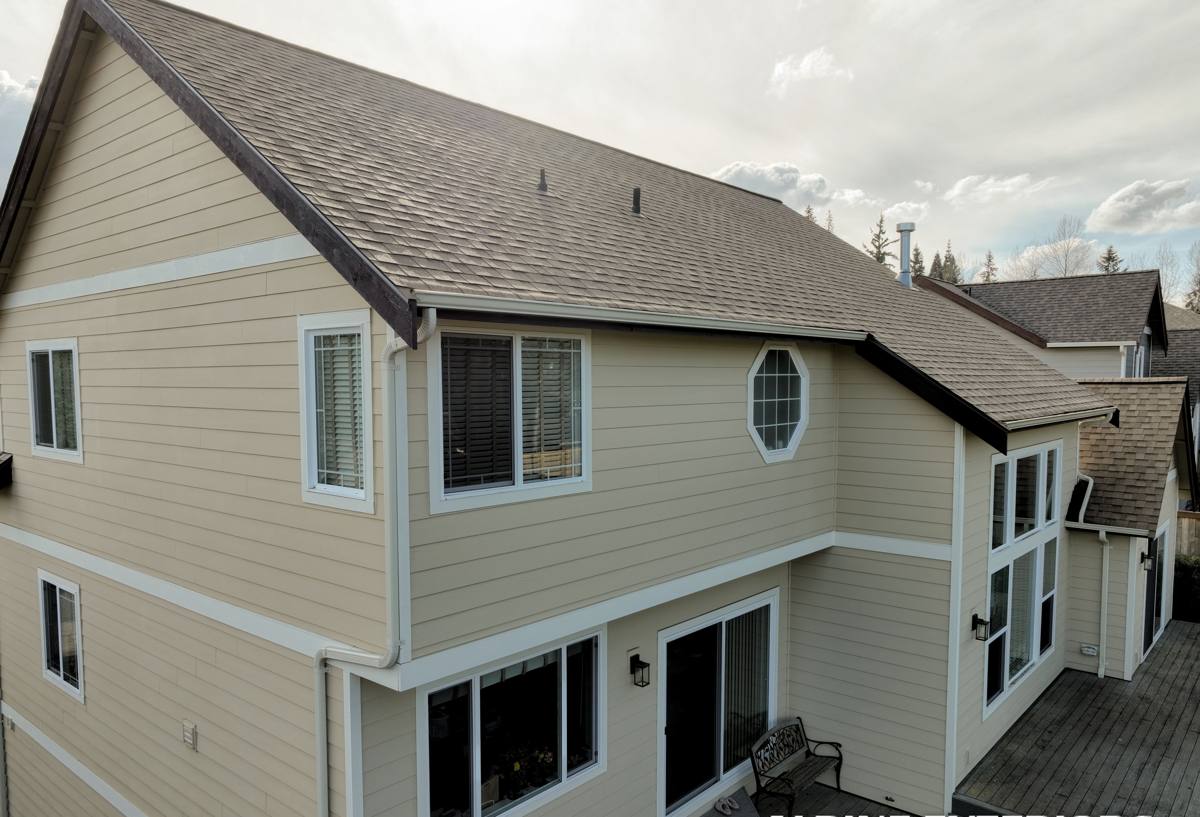
What South Hill Homes Actually Need
We get called out to South Hill for a few recurring reasons, and they're worth naming because they shape how we approach the job:
- Failed seals on older double panes. Fogging between the glass panes means the seal has failed and the insulating gas is gone — the window still "works" but it's no longer doing its job.
- Wood rot at the sill or lower corners. This is the classic sign of driving rain finding its way past an aging or improperly flashed window over years, not months.
- Drafts and cold spots that show up more in older wood-frame homes where the original weatherstripping has hardened or worn away.
- Moss and organic buildup on window sills, trim, and the wall surfaces just above and below windows, especially on north- and west-facing walls that don't get much sun to dry out.
- Operability issues — windows that stick, won't stay open, or won't latch properly, often from swelling wood or worn hardware.
None of these are emergencies on day one. They're slow problems that get more expensive the longer they sit, which is why we'd rather walk a homeowner through what we're actually seeing than sell a replacement nobody asked for.
Salt Air and Metal Components
Bellingham's proximity to the bay means a steady, low-level presence of salt in the air, even up on South Hill's higher ground. Over time this accelerates corrosion on unprotected metal hardware — hinges, cranks, locks, and screws. We favor corrosion-resistant hardware and fasteners on every install specifically because of this, not as an upsell but as a baseline standard for anywhere in Bellingham.
What a Correct Installation Actually Involves
A window is only as good as the opening it sits in. We've seen plenty of quality window units fail early not because the product was bad, but because the installation skipped steps that don't show up until the first hard rain finds the gap. Here's what we consider non-negotiable:
- Remove and inspect the opening. Once the old window is out, we check the framing, sill, and sheathing for rot, soft spots, or prior water intrusion before anything new goes in.
- Repair the substrate first. Any rot or damaged framing gets addressed before a new window goes in — installing a new window into a compromised opening just hides the problem temporarily.
- Flash the opening correctly. Proper flashing at the sill, jambs, and head directs water out and away from the wall assembly, shingle-style, so each layer overlaps the one below it. This is the single most important step for keeping driving rain out over the long run.
- Set the window level, plumb, and square. An out-of-square install stresses the frame, causes operability problems, and can compromise the seal over time.
- Insulate the gap correctly. The space between the window frame and the rough opening needs to be filled with an appropriate low-expansion material — packed too tight and it can bow the frame, left too loose and it becomes a draft and moisture path.
- Seal and caulk the exterior. Exterior sealant is the last line of defense, not the first — it backs up the flashing work, it doesn't replace it.
- Test operation before we leave. Every window gets opened, closed, and latched to confirm smooth operation before the job is called done.
Our Process for South Hill Jobs
Every South Hill property is a little different depending on when it was built and how it's been maintained, so we start with a straightforward walkthrough rather than a generic quote.
1. On-Site Assessment
We look at each window you're considering, note the frame material, condition, and any signs of water intrusion or rot around the opening. This tells us whether we're looking at a straightforward replacement or a job that needs some framing repair first.
2. Honest Scope and Estimate
We'll tell you plainly what we're seeing — including if a window doesn't need replacing yet and just needs re-caulking or hardware service instead. We'd rather earn a longer relationship with a homeowner than push work that isn't needed.
3. Installation
We follow the same flashing-first, substrate-first process on every job, regardless of whether it's one window or a whole house. We don't shortcut the steps that don't show until the first winter storm.
4. Cleanup and Walkthrough
We clean up the work area and walk through the finished installation with you, including basic care guidance specific to our climate.
Choosing Materials and Frames
There's no single "best" window material — the right choice depends on the home, the budget, and how much upkeep a homeowner wants to take on. Here's how the common options stack up for a coastal Whatcom County climate:
| Frame Type | Moisture Behavior | Maintenance | Typical Fit |
|---|---|---|---|
| Vinyl | Doesn't absorb moisture or rot; won't corrode | Low — occasional cleaning | Most replacement projects; strong value |
| Fiberglass | Very stable in wet, temperature-swinging conditions | Low | Higher-end replacements, larger openings |
| Wood (clad or painted) | Needs consistent finish maintenance to keep moisture out | Higher — periodic repainting/resealing | Character or historic-style homes where original look matters |
| Aluminum | Conducts cold and can promote condensation; more prone to corrosion near the bay | Moderate | Less common for residential re-glazing in this climate |
For most South Hill homes we lean toward vinyl or fiberglass simply because they hold up with the least maintenance in a climate that's damp more months than not. For homes where the original wood window look matters — older character homes on the hill are a good example — clad wood is a reasonable trade-off as long as the homeowner understands the maintenance commitment that comes with it.
Glass Options Worth Understanding
Beyond the frame, the glass package matters for both comfort and moisture control:
- Double-pane, insulated glass units are the baseline standard now for energy performance and condensation resistance.
- Low-E coatings help manage heat transfer year-round — useful for both winter heat loss and summer heat gain, even in our relatively mild summers.
- Argon or krypton gas fill between panes improves insulation slightly over an air-filled unit, though the practical difference is modest.
- Tempered glass is required by code in certain locations (near doors, low to the floor, in bathrooms) — we'll flag where this applies during the assessment.
Preventing Moss and Moisture Buildup After Installation
Even a perfectly installed window benefits from a little seasonal attention in this climate. A short checklist we give South Hill homeowners:
- Rinse or brush moss and organic debris off sills and surrounding trim once or twice a year, especially on shaded, north-facing walls.
- Check exterior caulking annually for cracking or gaps, particularly after a hard winter.
- Keep gutters and downspouts clear so overflow doesn't run down the wall and pool at window heads.
- Trim back vegetation that keeps a window or wall section shaded and damp longer than the rest of the house.
- Operate each window a few times through the year so hardware doesn't seize up from disuse.
Why a Crew That Knows South Hill Matters
Window installation isn't exotic work, but it's unforgiving of shortcuts, and the consequences of a bad flashing job don't show up until months or years later — usually as rot you can't see until it's already spread. A crew that regularly works South Hill and the broader Bellingham area has already seen how the local combination of salt air, driving rain, and long damp stretches plays out on real houses over time. That's the difference between an installer who follows a generic checklist and one who knows to double-check flashing details on a north-facing wall that never quite dries out, or to flag a hidden rot pocket because they've found the same thing three houses over. It's not about being from the neighborhood — it's about having installed and revisited enough windows in this specific climate to know where problems actually start.
If you're weighing whether your windows need attention, or you just want a straight answer about what shape they're in, we're happy to take a look. Reach out for a free, no-pressure estimate — we'll tell you what we see and let you decide from there.