 Bellingham Exterior
 Windows in a Neighborhood Built for the Long Haul
Happy Valley is one of Bellingham's older, established residential pockets, with a housing stock that spans decades — Craftsman bungalows, mid-century ramblers, and newer infill homes all sitting under mature tree cover a few minutes from Bellingham Bay. That mix means window age and condition vary a lot from house to house, even on the same block. Some homes still have their original single-pane sashes with old storm windows bolted on; others got a round of vinyl replacements 15-20 years ago that are now failing at the seals. Either way, the neighborhood's proximity to the water and its tree canopy create specific demands that a generic install doesn't always account for.
We work in Bellingham and across Whatcom County regularly, and Happy Valley's combination of salt-tinged marine air, near-constant cool-season rain, and heavy shade from mature trees puts extra strain on window frames, seals, and finishes compared to a drier or more open lot. Replacing windows here isn't just a swap-and-go job — it's an opportunity to fix the moisture and air-sealing problems that got the old windows into trouble in the first place.
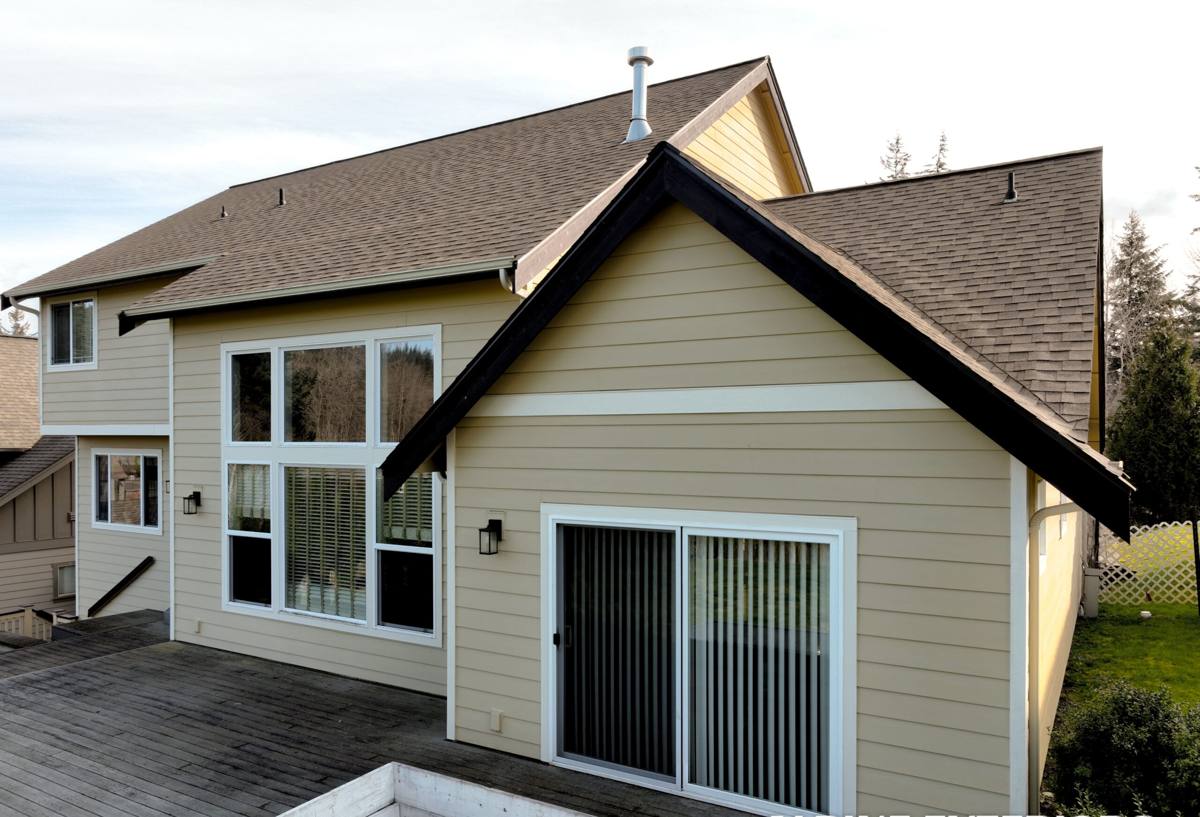
What This Climate Actually Does to Windows
Salt Air and Metal Fatigue
Even a few miles inland from the bay, airborne salt accelerates corrosion on aluminum frames, hardware, and fasteners. Locks stiffen, cranks on older casement windows seize up, and unprotected screws rust and stain the surrounding trim. Vinyl and properly clad frames resist this far better than bare aluminum.
Driving Rain and Wind-Driven Wetting
Whatcom County storms rarely come straight down — wind pushes rain sideways into wall assemblies, especially on west- and south-facing elevations. If the flashing and sealant details around a window aren't done correctly, that water finds its way behind the trim and into the wall cavity, where it can sit unnoticed for years.
Moss, Algae, and Shaded Exposure
Tree cover keeps a lot of Happy Valley lots shaded and slow to dry out after rain. That's good for the trees, less good for exterior wood trim and window sills, which stay damp longer and are more prone to moss, algae growth, and the slow rot that follows. Sills and exterior casing on older wood-frame windows are usually the first place we find soft spots.
Signs a Happy Valley Home Needs New Windows
- Visible fogging or a cloudy haze between the panes of a double-pane unit — the seal has failed and the gas fill is gone
- Drafts or cold spots near the window frame even when it's fully latched
- Wood trim or sills that feel soft, spongy, or show moss/algae staining
- Windows that are hard to open, close, or lock — often worse on aluminum-framed units near the bay
- Visible gaps, cracked caulk, or daylight showing around the frame from outside
- Noticeably higher heating bills in a home with original single-pane glass
- Condensation forming on the inside of the glass regularly during cold, wet weeks
What a Correct Window Replacement Actually Involves
The window itself is only part of the job. Most failures we see in this climate trace back to what happened — or didn't happen — around the window opening, not the unit itself. A proper install includes:
Full Removal, Not Just a Pocket Insert
Pocket replacements (sliding a new frame into the old one) are faster and cheaper, but they bury whatever moisture damage or bad flashing is already in the wall. On a home in a wet, shaded neighborhood like Happy Valley, we generally recommend full-frame removal so the opening can actually be inspected and corrected, not just covered over.
Inspecting the Rough Opening
Once the old window is out, we check the sheathing, framing, and any existing flashing for rot, soft wood, or old water staining. This is the point where hidden problems get caught — and fixed — before they're sealed behind a new window for another 20 years.
Correct Flashing and Water Management
Proper flashing tape and a drainage path direct any water that gets past the exterior cladding back out, rather than letting it pool at the sill. This detail matters more in wind-driven rain than the window's own rating does.
Air Sealing and Insulation
Low-expansion foam or backer rod and sealant around the frame — not just caulk on the outside — cuts drafts and prevents the window from becoming a cold spot that attracts condensation.
Weather-Appropriate Exterior Finishing
Trim, caulk joints, and any exposed wood get finished with products suited to sustained damp exposure, not just whatever cures fastest.
Choosing the Right Frame Material for This Climate
Frame material affects how a window holds up to salt air, rain, and shade over the long run. Here's how the common options compare for a Happy Valley setting:
| Frame Material | Moisture & Salt Air Behavior | Maintenance | Typical Fit |
|---|---|---|---|
| Vinyl | Won't corrode or rot; performs consistently in salt air and rain | Low — occasional cleaning | Most homes; strong value and durability balance |
| Fiberglass | Very stable in temperature swings and moisture; resists warping | Low | Homes wanting a slimmer profile or paintable finish |
| Wood (unclad) | Handsome but vulnerable to rot in shaded, damp conditions without diligent upkeep | High — regular repainting/sealing | Historic-style homes where owners commit to upkeep |
| Wood-clad | Exterior clad in vinyl, aluminum, or fiberglass shields the wood from weather | Moderate | Homeowners wanting a wood interior look with less exterior maintenance |
| Aluminum (uncoated) | Prone to corrosion and hardware seizing in salt-influenced air over time | Moderate to high | Generally not our first recommendation this close to the bay |
We don't push one brand or material on every home — the right call depends on your home's style, sun/shade exposure, and how much upkeep you want to take on. What we do insist on, regardless of material, is correct installation. A premium window installed with poor flashing will fail faster than a modest one installed correctly.
Glass Packages Worth Knowing About
Most new windows now come standard with double-pane, low-E coated glass and an argon or krypton gas fill, which cuts heat loss and UV fading. In a heavily shaded lot, solar heat gain matters less than air sealing and moisture control — so we'll talk through glass options based on your specific exposure rather than defaulting to the priciest package.
Our Process for a Happy Valley Window Job
- On-site assessment — we look at existing windows, note problem areas (sills, trim, drafts), and check exposure and shade patterns specific to your lot
- Honest recommendation — frame material, glass package, and full-frame vs. pocket install, explained in plain terms with the trade-offs
- Written estimate — clear scope, materials, and timeline before any work starts
- Careful removal — old windows and surrounding trim removed with the opening protected from weather throughout
- Opening inspection and repair — any rot or damaged framing addressed before the new window goes in
- Installation — new window set, shimmed, flashed, and insulated to manufacturer and code standards
- Exterior finishing — trim, caulking, and paint/stain matched to hold up in sustained damp conditions
- Final walkthrough — operation, seals, and finish checked with you before we consider the job done
Why Local, Happy Valley-Familiar Experience Matters
A crew that regularly works Bellingham and Whatcom County homes already knows which elevations in a given neighborhood take the worst wind-driven rain, how shaded lots behave differently than open ones, and which older construction details tend to hide moisture problems. That's not something you get from a national franchise crew passing through once. It also means faster scheduling around our wet season and a crew that understands why cutting corners on flashing costs a homeowner far more later than it saves now.
We also stand behind our installation work directly — if something about the install isn't right, you're not stuck chasing down a call center. That accountability matters more in a climate that will find any weak point in a window installation within a year or two, not a decade.
Questions to Ask Before Hiring Anyone for This Job
- Will you remove the full frame, or is this a pocket/insert replacement?
- Who inspects the rough opening for rot or moisture damage once the old window is out?
- What flashing and sealing method will you use, and why?
- Are you licensed and insured to do exterior work in Washington State?
- What's covered under your workmanship warranty, separate from the manufacturer's product warranty?
- Can you walk me through why you're recommending this specific frame material for my home?
Getting Started
Window replacement done right in Happy Valley means planning for the rain, the salt air, and the shade this neighborhood actually gets — not just installing whatever's on the truck. If your windows are fogging, drafty, or showing soft trim and moss staining, it's worth having someone take a real look before winter weather makes small problems bigger. We're happy to walk your home, point out what we see, and give you a straightforward, no-pressure estimate using the form below.