 Bellingham Exterior
 Storm Damage Roof Repair in York, Bellingham
Homes in York sit close enough to Bellingham Bay to catch salt-laden wind off the water, and far enough into the city's older tree canopy to deal with heavy shade, needle drop, and moss on top of it. That combination is what makes storm damage repair here different from a quick patch job. A roof in this part of Bellingham isn't just recovering from one storm — it's recovering from one storm on top of a roof surface that's already been softened by months of damp shade and organic buildup. We look at both when we go up on a York roof, not just the obvious damage.
This page is about one job: storm damage roof repair for homes in and around York. Not a full re-roof pitch, not a general contractor page — what actually needs to happen when wind, rain, or falling debris damages a roof in this specific corner of Whatcom County, and how to get it done correctly the first time.
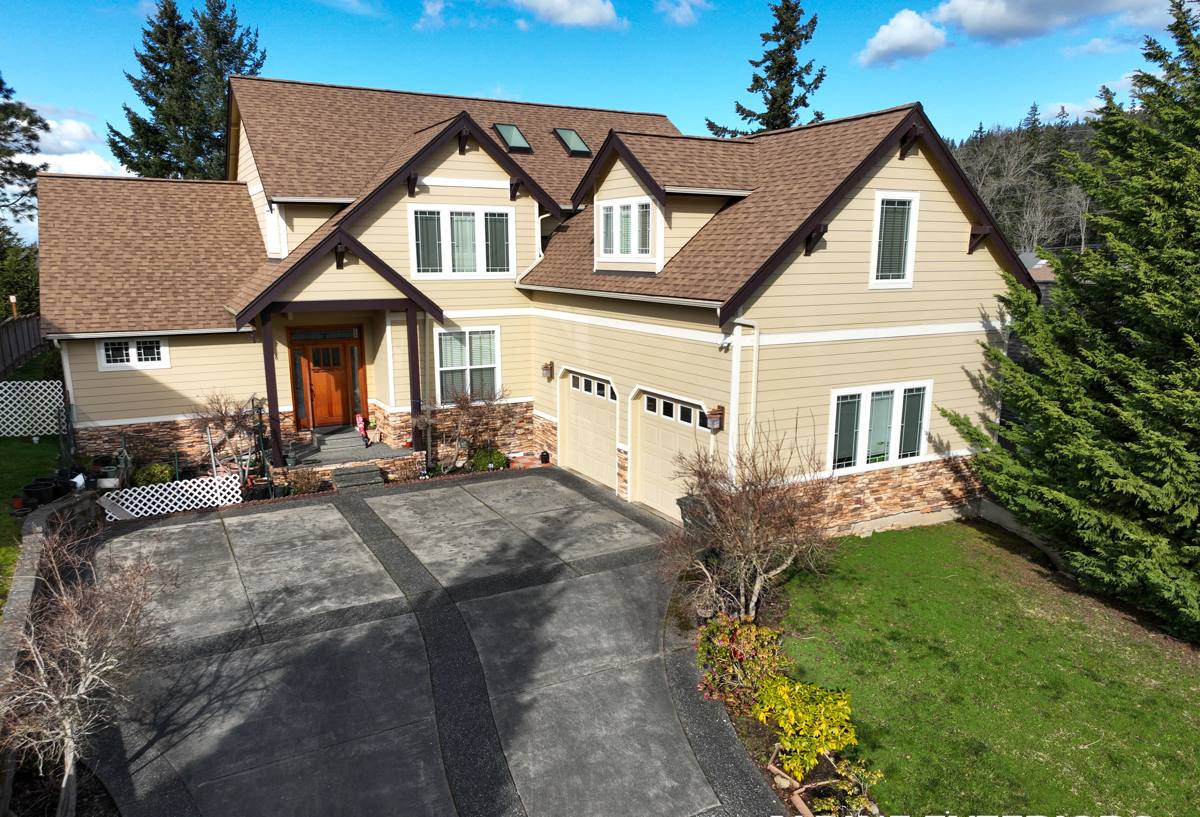
What Whatcom County Storms Do to a Roof
Bellingham doesn't get hurricanes, but it gets a steady diet of Pacific frontal systems and the occasional Puget Sound convergence zone windstorm that can gust hard enough to lift shingles, snap branches, and drive rain sideways under flashing that would otherwise hold up fine. The damage pattern is usually less dramatic than what you'd see after a Midwest hailstorm and more insidious: a few lifted shingle tabs, a bent piece of flashing, a gutter pulled loose, a branch strike that cracks a shingle without tearing it off entirely.
The problem is that this kind of damage doesn't announce itself. Water doesn't necessarily show up on the ceiling right after the storm — it can take weeks of repeated rain events working through a small gap before you see a stain. By the time you notice it, the underlayment and decking underneath may already be wet.
Wind vs. Rain Damage — Different Repairs
Wind damage tends to be mechanical: shingles torn loose, nails backed out, flashing bent or displaced, ridge caps cracked. Rain damage is usually a follow-on effect — water finding its way through wind-created gaps, or through seams that were already marginal. A correct repair addresses both: refastening or replacing what the wind moved, and confirming nothing got wet underneath before closing it back up.
Salt Air, Rain, and Moss: The Long Game
Three things wear on York roofs year-round, storm or no storm:
Salt Air
Proximity to Bellingham Bay means airborne salt settles on roofing metal — flashing, fasteners, gutter hangers, vent caps — faster than it would inland. Over years, that accelerates corrosion at exactly the points where a roof depends on metal to stay watertight. When we're repairing storm damage on a home near the water, we pay close attention to fastener and flashing condition even outside the immediate damage area, because salt exposure can be quietly compromising nearby metal at the same time.
Driving Rain
Whatcom County rain isn't always vertical. Wind-driven rain gets pushed under shingle tabs, around chimney flashing, and into any gap that would stay dry in a calmer climate. This is why a repair that only replaces the visibly damaged shingles — without checking the flashing and underlayment nearby — often fails again in the next storm.
Moss Season
Bellingham's wet season runs long, and shaded roofs under mature trees stay damp for extended stretches, which is exactly what moss needs to establish. Moss holds moisture against the shingle surface, lifts tabs as it grows, and can work into the space a storm already opened up. A roof with moss buildup is more vulnerable to storm damage in the first place, and repairs on a mossy roof need to deal with the moss, not just the storm's damage, or the same spot will fail again.
Signs of Storm Damage Worth a Second Look
Most homeowners check for the obvious — missing shingles on the ground, an obvious leak. Storm damage is often subtler than that. Worth checking after any significant wind or rain event:
- Shingle tabs that look lifted, curled, or slightly out of line compared to the rest of the roof
- Granules collecting in gutters or at downspout outlets — a sign of shingle surface wear or impact
- Bent, lifted, or missing flashing around chimneys, vents, or roof-to-wall transitions
- Gutters or downspouts pulled away from the fascia, sagging, or disconnected at joints
- New or worsening moss growth concentrated in one area, which can indicate a spot that's staying wetter than it should
- Any ceiling stain, even a faint one, that appeared or grew after a storm
- Debris — branches, needles, cones — built up in valleys where water is supposed to drain freely
- Soft spots underfoot if you're checking an attic, or daylight visible through roof boards from inside
Any one of these on its own might not mean much. Two or three together, especially after a wind event, is worth a professional look before the next storm rolls through.
What a Correct Repair Actually Involves
A storm damage repair done right isn't just swapping out the shingles you can see are missing. It's a sequence:
1. Full-Slope Inspection, Not Just the Damaged Spot
We walk the whole roof plane, not just the area where damage is visible from the ground. Wind damage frequently extends beyond what's obvious, and a repair that ignores nearby weak spots is a repair that gets called back out after the next storm.
2. Check the Decking, Not Just the Surface
If water got underneath the shingle layer, the plywood or board decking beneath it may be wet or starting to soften. Replacing shingles over compromised decking just hides the problem. We check for soft spots and moisture before closing anything back up.
3. Match Flashing and Underlayment, Not Just Shingles
Flashing and underlayment do more of the actual waterproofing work than the shingles themselves. A repair that replaces shingles but reuses bent or corroded flashing is a repair that's likely to leak again in the same spot.
4. Address Moss and Debris While We're Up There
Since we're already on the roof for the storm repair, it makes sense to clear debris from valleys and gutters and deal with active moss nearby, rather than leaving conditions that will just create the next round of damage.
Our Process
For a York storm damage call, our process is straightforward:
- Inspection and photo documentation — we assess the full roof, not just the reported damage, and document what we find. This documentation is also what you'll want if you're filing an insurance claim.
- Written scope and estimate — a clear explanation of what needs repair, what we recommend as precautionary (like nearby flashing or fasteners showing wear), and a straightforward cost breakdown.
- Repair — using materials matched to your existing roof where possible, with attention to flashing, underlayment, and decking, not just surface shingles.
- Final walkthrough — we show you what was done and why, and flag anything worth watching going forward.
Repair or Replace? Cost Factors
Not every storm-damaged roof needs a repair, and not every repair candidate should be talked into a full replacement. The honest answer depends on a few factors:
| Factor | Repair Usually Makes Sense | Replacement Worth Considering |
|---|---|---|
| Extent of damage | Isolated to one area or slope | Damage spread across multiple slopes |
| Roof age | Roof is under 15-20 years old | Roof is near or past its expected service life |
| Decking condition | Decking is dry and sound | Widespread soft spots or rot found underneath |
| Moss/algae history | Minimal, manageable growth | Chronic moss with granule loss across large areas |
| Flashing condition | Localized wear near damage | Corrosion or failure at multiple penetrations |
| Insurance scope | Claim covers a defined repair area | Adjuster's scope already approaches full replacement |
We'll tell you honestly which side of that line your roof falls on. A repair that's going to need another repair in two years isn't doing you a favor.
Why Local Experience in York Matters
A roofer who works regularly in this part of Bellingham knows what to expect before climbing the ladder: the salt exposure from the bay, the shade patterns from mature trees that keep certain roof sections wetter longer, and which storm patterns tend to hit this side of the city hardest. That's not something you get from a crew that's just passing through Whatcom County for a one-off job.
It also matters for follow-up. Storm damage repair sometimes reveals a second issue a few months later — a flashing seam that was borderline, a spot of moss that comes back. A local crew is the one that's still around and reachable when that happens, not a name that showed up after the storm and moved on to the next county.
Working With Insurance After a Storm
Most storm damage repair on a homeowner's policy goes through an insurance claim. A few things help that process go smoothly:
- Document damage with photos as soon as it's safely possible, before any cleanup or tarping changes the scene
- Get a contractor's written estimate that itemizes repair versus pre-existing wear — adjusters look for this distinction
- Understand your policy's distinction between storm damage (usually covered) and gradual wear like moss or age-related deterioration (usually not)
- Ask questions if an adjuster's scope seems to leave out flashing or decking work the contractor identified as necessary
We're glad to walk through our documentation with you or your adjuster directly — that's a normal part of the process, not an extra ask.
Get an Estimate
If a recent storm has left your York-area roof with lifted shingles, damaged flashing, or a leak you're not sure about, we're happy to take a look. There's no pressure and no obligation — just a straightforward assessment of what's actually going on and what it would take to fix it right. Use the form below to request a free estimate.